
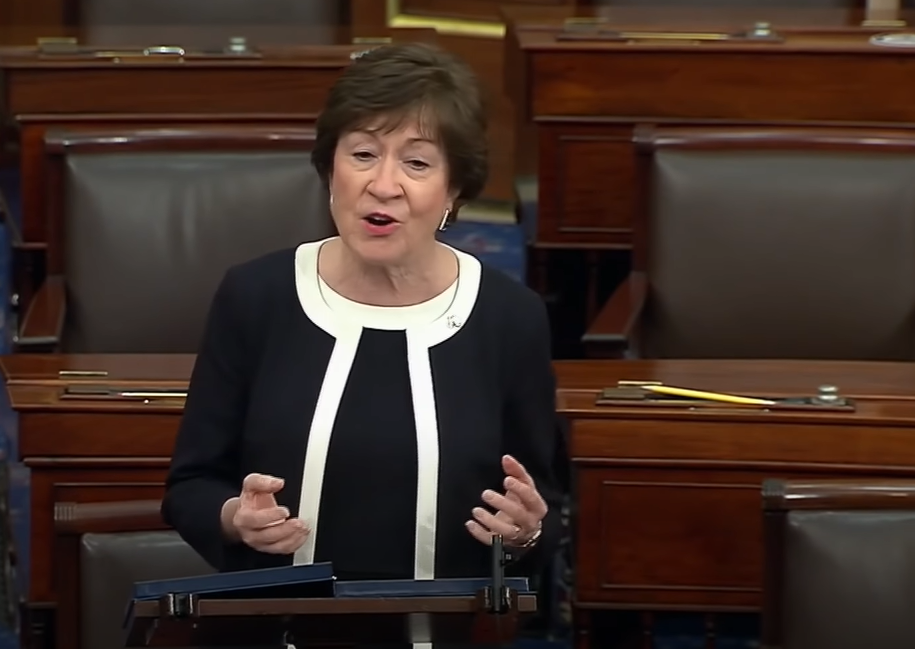
Senator Susan Collins joined host Phil Harriman on “Inside Maine” Saturday to discuss the U.S.-led operation that resulted in the arrest and extradition of Venezuelan leader Nicholas Maduro—a move that has sparked debate on Capitol Hill and around the country. During the interview, Collins emphasized both her support for the operation and her belief in the need for Congress to authorize any additional military involvement, setting the stage for a conversation on American foreign policy, partisanship, and the path forward for Venezuela.
A Law Enforcement Operation with Global Implications
Senator Collins opened the conversation by clarifying that Congress was not briefed ahead of the operation, which she noted is typically standard procedure for actions of such magnitude. Despite this, she voiced strong support for Maduro’s arrest and removal, describing him as “a narco-terrorist and an international drug trafficker who has been responsible for the addiction and deaths of many Americans.”
“I think this was primarily a law enforcement operation,” Collins stated, “since he had been indicted twice by U.S. courts, and he should stand trial on American soil.” Collins praised the coordination between U.S. military and law enforcement agencies, calling their efforts “extraordinary,” and commended their “skill, courage, and precision.”
Partisan Reactions and Changing Positions
Host Phil Harriman noted the conflicting opinions among members of Congress, observing that what might have once been a bipartisan matter has now become the subject of partisan disagreement. Senator Collins echoed this sentiment, pointing out the shift in positions among some of her Democratic colleagues. “It is odd for me to see a fair number of Democrats now questioning what they did not question in the Biden administration,” she said, referencing the $25 million bounty placed on Maduro’s arrest by the previous Democratic administration.
Legislative Action and Presidential Response
The interview turned to legislative steps taken following Maduro’s capture. Senator Collins described her vote in favor of a Senate resolution that would prevent the president from engaging in further military action in Venezuela without explicit congressional approval. She explained, “The circumstances have now changed, and I do not support committing additional US forces, boots on the ground, as the President has mentioned, or entering into any long term military involvement in Venezuela or Greenland for that matter.”
Collins also recounted a conversation with President Trump, who personally called the handful of Republican senators—including Collins—who supported the War Powers resolution. While the president attempted to persuade her to change her vote, Collins stood firm, stressing her “constitutional responsibility” and the need to preserve Congress’s authority to declare war, as outlined in the War Powers Act.
Long-Term Vision for Venezuela and the Region
Looking ahead, Senator Collins expressed hope for Venezuela’s eventual return to democracy and economic health—a development she believes would send a positive message throughout the region and to rival powers around the world. “If Venezuela can work to return itself with help from international partners and private sector entities to the country it once was—a vibrant, rich democracy—that would send a very good sign,” Collins said. She also noted the operation’s significance as a warning to other nations, including China, Russia, and Iran, not to interfere in Venezuela’s future.
Collins finished the interview by reiterating the need for bipartisan cooperation and thoughtful restraint in American foreign policy: “The long term success, the future of Venezuela depends on the Venezuelans, and that doesn’t mean that we shouldn’t, with support of our international and private sector partners, help Venezuela get back on its feet.”
Conclusion
Senator Collins’s remarks offer insight into the complex dynamics of U.S. foreign interventions, the responsibilities of Congress, and the hope for a democratic Venezuela. As the world watches the next steps in Venezuela’s transition, Collins’s insistence on constitutional oversight and international partnership is likely to resonate with policymakers and citizens alike.
To listen to the interview Click Here